
Confirm it is dry AMD
Sudden changes, distortion, leakage or bleeding need urgent assessment for wet AMD rather than PBM.
Photobiomodulation is a light-based treatment used at AMD Clinic for selected patients with dry AMD. It is designed to support retinal health without injections or surgery.
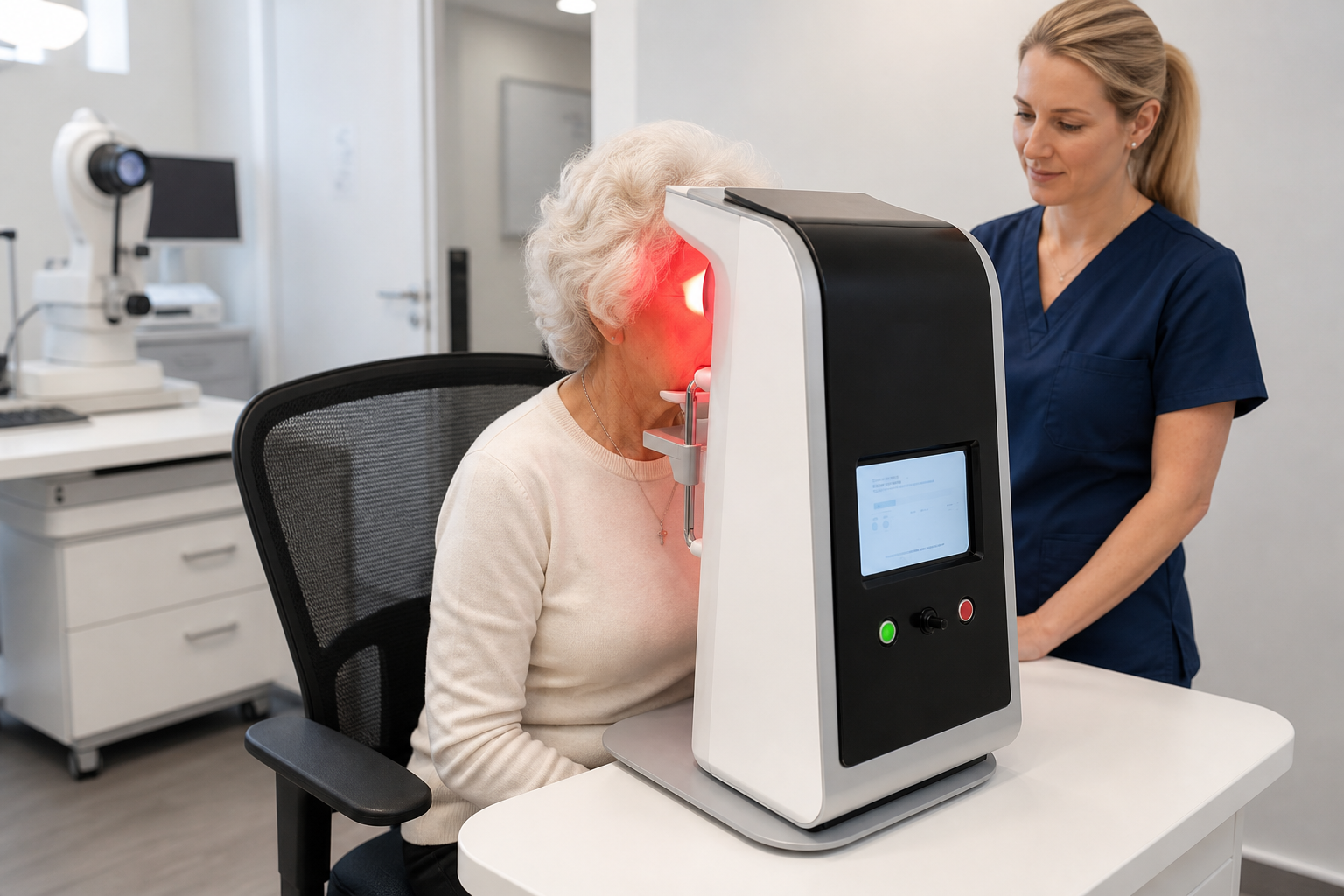
Photobiomodulation, often shortened to PBM, uses carefully controlled light to support retinal cells in selected people with dry AMD. It is not an injection, and it is not surgery.
In dry AMD, retinal cells can become less efficient over time. PBM is designed to deliver specific wavelengths of light to the retina, where the aim is to support cell energy, reduce stress on ageing tissue and help preserve visual function where appropriate.
It is best thought of as a specialist option for selected dry AMD patients. It does not replace OCT imaging, monitoring, lifestyle advice or careful assessment of whether wet AMD or advanced geographic atrophy is present.
The most important first step is understanding your current stage of AMD. Suitability depends on your retinal findings, your symptoms, your scan results and whether PBM is appropriate in your particular case.
Many people with dry AMD are told to monitor their eyes, but they still want to know whether anything active can be done before vision changes further.
PBM is appealing because it is non-invasive and is aimed at supporting retinal function. The decision, though, should be based on specialist assessment rather than internet reading alone.
A careful review helps separate patients who may be suitable from those who need monitoring, wet AMD treatment or a different dry AMD care plan.
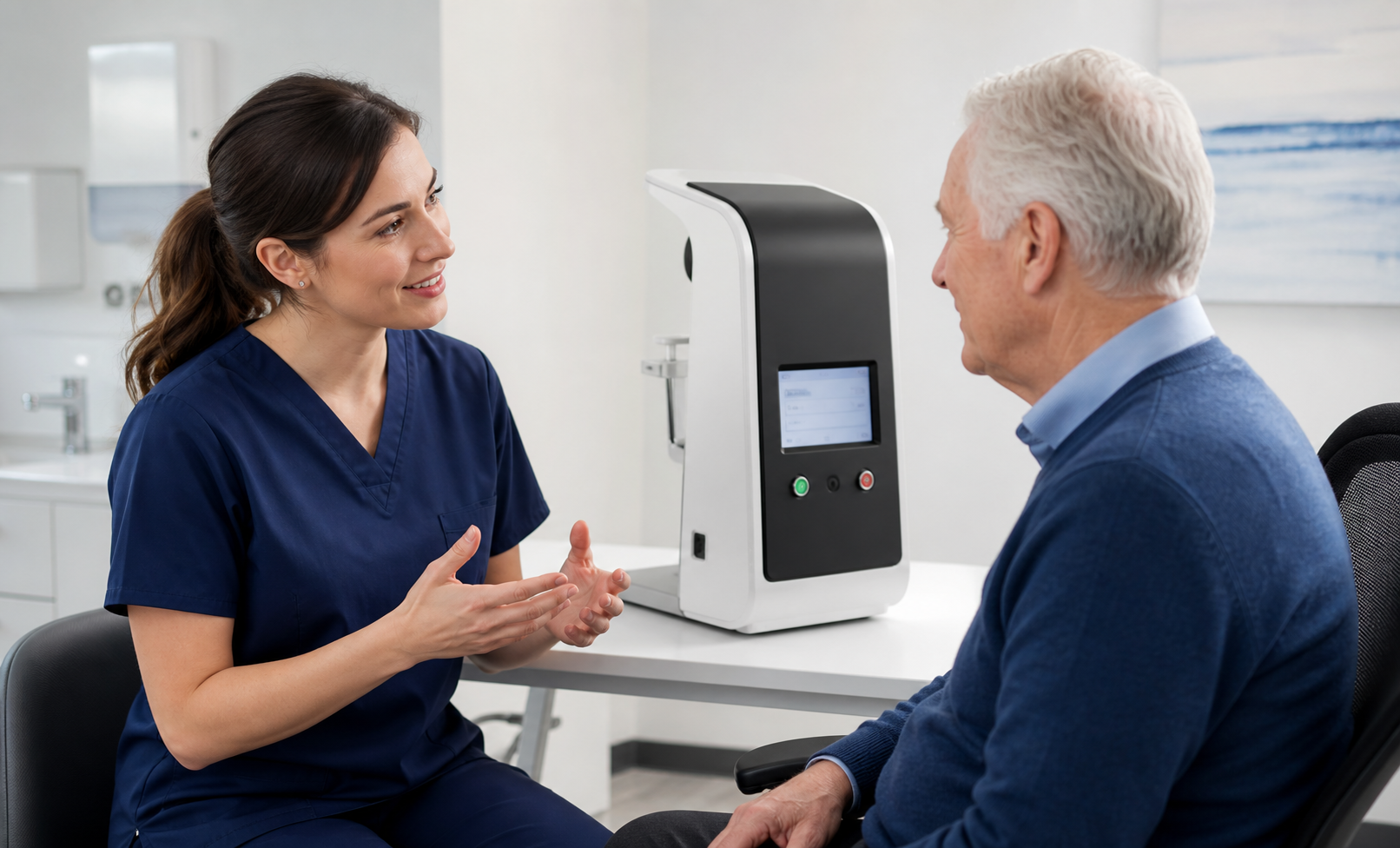
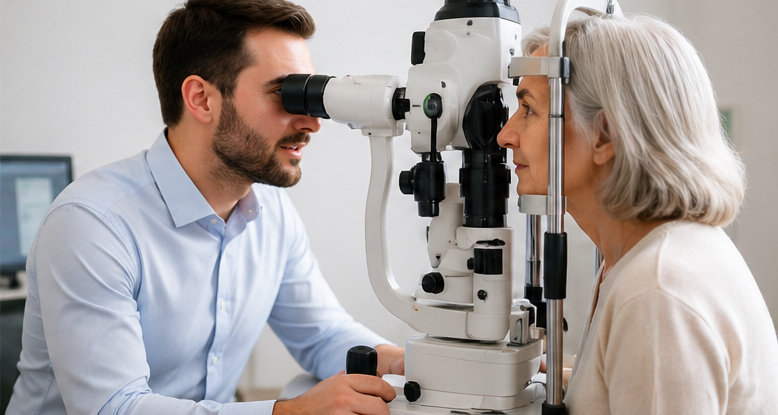
PBM is considered for selected patients with dry AMD, particularly where the aim is to support retinal function before more advanced changes develop.
Published PBM treatment protocols commonly involve a series of short sessions rather than a single appointment. In the LIGHTSITE studies, treatment was delivered as nine sessions over around 3-5 weeks, with repeat courses at intervals.
Your specialist will explain what schedule is appropriate locally, what to expect during appointments and how your response should be monitored.
PBM is not a cure for dry AMD. It is a supportive treatment option for selected patients, and the aim is to help retinal function and visual outcomes where the eye findings indicate that it is appropriate.
Some patients may notice benefit, while others may not. The right conversation is about suitability, safety, expected benefits, limitations and how PBM fits into your wider AMD plan.
The LIGHTSITE clinical trials studied multi-wavelength PBM for dry AMD and reported visual acuity benefits compared with sham treatment. Regulatory authorisation in the United States is specific to defined dry AMD criteria.
The safest way to consider PBM is to begin with a clear diagnosis, OCT imaging and a discussion about what stage of AMD you have.
Sudden changes, distortion, leakage or bleeding need urgent assessment for wet AMD rather than PBM.
OCT imaging helps show whether the retina has features where PBM may be worth discussing.
Your plan may include monitoring, lifestyle advice, AREDS-style supplements, PBM or referral for urgent treatment if needed.
If you have dry AMD and want to understand whether photobiomodulation belongs in your plan, start with specialist assessment and OCT imaging.