
Initial consultation and diagnosis with specialist assessment.
Wet AMD
Protect your sight by acting quickly.
Wet AMD can damage vision quickly. The good news is that treatment can often slow or stop further damage, especially when it is started without delay.

How wet AMD starts
Wet AMD often develops after a longer period of dry AMD. It is less common than dry AMD, but it can move quickly and needs urgent attention when symptoms change.
In wet AMD, abnormal blood vessels grow underneath the retina. This is known as choroidal neovascularisation. These fragile new vessels can leak fluid or blood into the macula, the part of the eye responsible for detailed central vision.
If leakage or bleeding is not treated quickly, it can scar the macula and cause permanent damage. That is why a sudden change in vision should never be ignored, especially in someone who has already been told they have dry AMD.
This is the key difference between dry and wet AMD. Dry AMD is often monitored over time, while wet AMD is treated as urgent because leakage or bleeding can affect central vision quickly. The earlier this change is confirmed, the sooner treatment can be started.
Why speed matters
Wet AMD can develop very quickly. The aim is to stop abnormal blood vessels growing, leaking and bleeding before more damage occurs.
Left untreated, wet AMD can seriously damage the macula. Bleeding may lead to sudden, permanent loss of central vision.
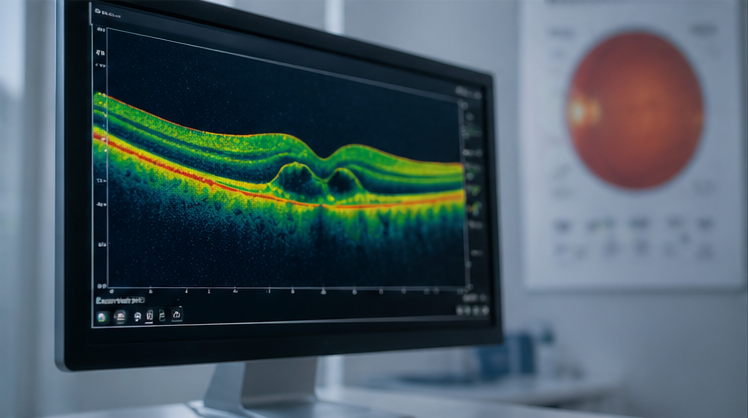
Prompt diagnosis, OCT imaging and treatment give you the best chance of preserving your sight.

When to seek help urgently
If you have dry AMD, it is important to stay alert for sudden deterioration. Wet AMD can cause changes that appear quickly rather than gradually.
- New distortion, such as straight lines looking wavy
- A sudden blur or dark patch in central vision
- A clear change from how things looked recently
- Any sudden worsening if you already have dry AMD
Treatment
Wet AMD is usually treated with anti-VEGF injections.
Anti-VEGF medicines are injected into the eye to work against vascular endothelial growth factor, a protein that encourages abnormal blood vessel growth.
By targeting VEGF, treatment can reduce the growth of abnormal blood vessels and help control leaking or bleeding. Medicines used for wet AMD include Eylea, Lucentis, Avastin and Vabysmo, among others.
What treatment aims to do
- Prevent further damage to the macula
- Reduce leaking and bleeding from abnormal vessels
- Give some patients a chance of visual improvement
- Guide ongoing care with regular OCT imaging and review
Having an injection
It is completely understandable to feel anxious about an eye injection. Patient comfort matters as much as patient safety, so the procedure is explained carefully before treatment goes ahead.
After an injection, floaters, redness and some discomfort can occur. In most cases this settles within a few days, although some patients notice improvement in vision over days, weeks or months.
You are welcome to contact the clinic if you have any concerns after treatment.
Ongoing monitoring
Wet AMD care usually involves close follow-up. Regular review, often around every four weeks, allows the clinic to check the retina, repeat imaging and arrange injections promptly if required.
Clear treatment pricing
Private wet AMD care is designed to give you prompt access to specialist assessment, OCT imaging and treatment when time matters.
Detailed retinal imaging to assess eye health and guide treatment.
Per-eye treatment options include Avastin, Eylea, Lucentis and Vabysmo.
Avastin
£1020
Eylea
£1400
Lucentis
£2120
Vabysmo
£1900
Bilateral treatment for both eyes may be available at a reduced rate.
Concerned about sudden vision changes?
Wet AMD needs prompt assessment. If your vision has changed suddenly, contact AMD Clinic and ask about an urgent appointment.