
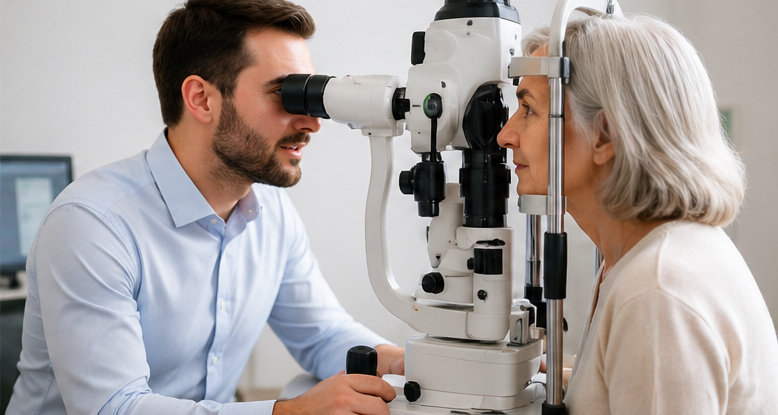
Being told you have AMD or drusen can leave you with more questions than answers. An AMD Risk Assessment is designed to slow things down, look carefully at your eyes, and explain what the findings mean for you as an individual.
Why patients book an assessment
Many people come to the clinic after a routine eye test, an OCT scan at an optician, or a previous hospital appointment. They may have been told that early AMD is present, but still feel unsure about the level of risk or what they should do next.
The purpose of the assessment is to bring those pieces together: your symptoms, medical and eye history, scan findings and specialist opinion. The result should be a practical plan rather than a vague label.
What happens during the appointment
The exact appointment may vary depending on your eyes and symptoms, but it will usually include:
- A discussion about any changes in vision, distortion, reading difficulty or dark patches
- A review of previous eye findings, family history and relevant health factors
- OCT retinal imaging to look closely at the macula and the layers of the retina
- A specialist explanation of whether findings look stable, higher risk or in need of closer review
- Advice on monitoring, treatment options, lifestyle steps or follow-up timing
Why OCT imaging is useful
OCT imaging gives a detailed cross-sectional view of the retina. For AMD, it can help identify features such as drusen, fluid, retinal layer changes or signs that need prompt attention. This does not replace the specialist conversation, but it gives the discussion a clearer foundation.
The goal is not just to name the condition. It is to help you understand what has been found, how urgent it is, and what should happen next.
What you should leave with
By the end of the appointment, you should have a clearer sense of where you stand. Some patients need reassurance and routine monitoring. Others may need closer follow-up, urgent wet AMD assessment, or a discussion about options for dry AMD support.
You should also know which symptoms require urgent advice. Sudden distortion, a new dark patch in central vision, or a sudden drop in central vision should be checked promptly.
Is an assessment right for you?
An AMD Risk Assessment may be helpful if you have been told you have AMD, drusen or macular changes and want a more detailed explanation. It is also useful if you are unsure whether monitoring is enough or whether you should be seen sooner.
If symptoms are sudden or severe, do not wait for a routine appointment. Seek urgent medical or eye-care advice.